Queen Nefertiti

Queen Nefertiti of Egypt was a native of Mitanni. The Mittani Kingdom of Armenia was an off-shoot of the Hurrian kingdom. The Hurri and the Mittani peoples were the contemporaries the Hittites and the Hykos, within whom they shared many cultural and political aspects. Today, all these aforementioned nations are considered to be, in varying degrees, proto-Armenians; that is we modern day Armenians are direct descendants of the remnants of those ancient tribes. Moreover, Solomon's wife was a Hittite and King David purchased Jerusalem from Hurrians. Hittites, Hyksos, Hurrians, Mittani and Urartu had an immense impact upon the ancient world for centuries. The following is some information I retrieved from a Georgian website:
Arevordi
***
Hurri n.
( pl. same or Hurris) a member of a people, originally from Armenia, who settled in northern Mesopotamia and Syria during the 3rd-2nd millennium bc and were later aborbed by the Hittites and Assyrians. (See also Mitanni.) Hittite & Assyrian Harri, Hurri.
The Oxford English Reference Dictionary, © Oxford University Press 1996
Hurrians
A people living in E Anatolia and N Mesopotamia during the 2nd millennium bc. The Hurrians probably originated in the Armenian mountains before their expansion. Their language, which is extinct, was neither Indo-European nor Semitic, but may be related to Georgian and the Caucasian languages. It is largely known from cuneiform tablets from Hattusas, the capital of the Hittites, whose civilization the Hurrians greatly influenced. There was never a Hurrian empire, but the powerful kingdom of Mitanni (1550-1400 bc) was largely Hurrian in population.
Nefertiti (14th century BC) Wife of King Amenhotep IV of Egypt. Probably born in Mitanni, an empire based in what is now northern Iraq, Nefertiti became the chief wife of the intellectual Egyptian ruler Amenhotep IV (reigned about 1379-1362 BC). She bore him six daughters but no son. His reign was distinguished by a religious revolution, strongly supported by Nefertiti, that renounced the established pantheon of gods in favour of a single, supreme deity, Aton. Aton, represented by a sun disc, was revered as the source of life and the bounties of nature.
The Penguin Biographical Dictionary of Women, © Market House Books Ltd 1998
Source: http://www.geocities.com/shavlego/anthropology.htm
Here is what Armenians say about this matter:
"Egyptologists have hinted the Egyptian fascination with the pyramid to this belief. The Egyptians had since ancient times developed close connections with the people of Ararat. The great pharaohs often married into the noble and royal families of ancient Armenian kingdom of Mittani, Queen Nefertiti being one of the most notable representatives of Mitanni princesses on the Egyptian throne. Their friendship and cooperation with the Kingdom of Mittani and intimate connections stretched from the Kingdom's period into the Hyksos and Hurrian dynasties (XVI th dynasty) in Egypt from the Armenian Highland. The Holy Bible and the Hebrew scriptures too, tell us of the Great Flood and Noah's Ark. Forty days of the Great Flood, which symbolizes the long period of time of the Flood and constant precipitation (the number forty in ancient civilizations, meant a lot, in Armenian Folklore it even had a significant and symbolic importance)."
Source: http://www.geocities.com/paris/leftbank/65...ronicle100.html
The Hurrian and Mitanni - Kingdoms of the Armenian Highlands
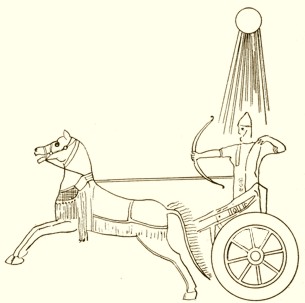
The weakening of the Semitic states in Mesopotamia after 1550 enabled the Hurrians to penetrate deeper into this region, where they founded numerous small states in the eastern parts of Anatolia, Mesopotamia, and Syria. The Hurrians came from northwestern Iran (Armenian Highlands), but until recently very little was known about their early history. After 1500, isolated dynasties appeared with Indo- Aryan names, but the significance of this is disputed. The presence of Old Indian technical terms in later records about horse breeding and the use of the names of Indian gods (such as, for example, Indra and Varuna) in some compacts of state formerly led several scholars to assume that numerous groups of Aryans, closely related to the Indians, pushed into Anatolia from the northeast. They were also credited with the introduction of the light war chariot with spoked wheels. This conclusion, however, is by no means established fact. So far it has not been possible to appraise the numbers and the political and cultural influence of the Aryans in Anatolia and Mesopotamia relative to those of the Hurrians.
[...]
The kingdom of Mitanni was a feudal state led by a warrior nobility of Aryan or Hurrian origin. Frequently horses were bred on their large landed estates. Documents and contract agreements in Syria often mention a chariot-warrior caste that also constituted the social upper class in the cities. The aristocratic families usually received their landed property as an inalienable fief. Consequently, no documents on the selling of landed property are to be found in the great archives of Akkadian documents and letters discovered in Nuzi, near Kirkuk. The prohibition against selling landed property was often dodged, however, with a stratagem: the previous owner "adopted" a willing buyer against an appropriate sum of money. The wealthy lord Tehiptilla was "adopted" almost 200 times, acquiring tremendous holdings of landed property in this way without interference by the local governmental authorities. He had gained his wealth through trade and commerce and through a productive two-field system of agriculture (in which each field was cultivated only once in two years). For a long time, Prince Shilwa-Teshub was in charge of the royal governmental administration in the district capital. Sheep breeding was the basis for a woolen industry, and textiles collected by the palace were exported on a large scale. Society was highly structured in classes, ranks, and professions. The judiciary, patterned after the Babylonian model, was well organized; the documents place heavy emphasis on correct procedure.
Native sources on the religion of the Hurrians of the Mitanni kingdom are limited; about their mythology, however, much is known from related Hittite and Ugaritic myths. Like the other peoples of the ancient Middle East, the Hurrians worshiped gods of various origins. The king of the gods was the weather god Teshub. According to the myths, he violently deposed his father Kumarbi; in this respect he resembled the Greek god Zeus, who deposed his father Kronos. The war chariot of Teshub was drawn by the bull gods Seris ("Day") and Hurris ("Night"). Major sanctuaries of Teshub were located at Arrapkha (modern Kirkuk) and at Halab (modern Aleppo) in Syria. In the east his consort was the goddess of love and war Shaushka, and in the west the goddess Hebat (Hepat); both were similar to the Ishtar-Astarte of the Semites. The sun god Shimegi and the moon god Kushuh, whose consort was Nikkal, the Ningal of the Sumerians, were of lesser rank. More important was the position of the Babylonian god of war and the underworld, Nergal. In northern Syria the god of war Astapi and the goddess of oaths Ishara are attested as early as the 3rd millennium BC. In addition, a considerable importance was attributed to impersonal numina such as heaven and earth as well as to deities of mountains and rivers. In the myths the terrible aspect of the gods often prevails over indications of a benevolent attitude. The cults of sacrifices and other rites are similar to those known from the neighbouring countries; many Hurrian rituals were found in Hittite Anatolia. There is abundant evidence for magic and oracles.
Temple monuments of modest dimensions have been unearthed; in all probability, specific local traditions were a factor in their design. The dead were probably buried outside the settlement. Small artifacts, particularly seals, show a peculiar continuation of Babylonian and Assyrian traditions in their preference for the naturalistic representation of figures. There were painted ceramics with finely drawn decorations (white on a dark background). The strong position of the royal house was evident in the large palaces, existing even in district capitals. The palaces were decorated with frescoes. Because only a few Mitanni settlements have been unearthed in Mesopotamia, knowledge of Mitanni arts and culture is as yet insufficient.
[...]
The kingdom of Mitanni was a feudal state led by a warrior nobility of Aryan or Hurrian origin. Frequently horses were bred on their large landed estates. Documents and contract agreements in Syria often mention a chariot-warrior caste that also constituted the social upper class in the cities. The aristocratic families usually received their landed property as an inalienable fief. Consequently, no documents on the selling of landed property are to be found in the great archives of Akkadian documents and letters discovered in Nuzi, near Kirkuk. The prohibition against selling landed property was often dodged, however, with a stratagem: the previous owner "adopted" a willing buyer against an appropriate sum of money. The wealthy lord Tehiptilla was "adopted" almost 200 times, acquiring tremendous holdings of landed property in this way without interference by the local governmental authorities. He had gained his wealth through trade and commerce and through a productive two-field system of agriculture (in which each field was cultivated only once in two years). For a long time, Prince Shilwa-Teshub was in charge of the royal governmental administration in the district capital. Sheep breeding was the basis for a woolen industry, and textiles collected by the palace were exported on a large scale. Society was highly structured in classes, ranks, and professions. The judiciary, patterned after the Babylonian model, was well organized; the documents place heavy emphasis on correct procedure.
Native sources on the religion of the Hurrians of the Mitanni kingdom are limited; about their mythology, however, much is known from related Hittite and Ugaritic myths. Like the other peoples of the ancient Middle East, the Hurrians worshiped gods of various origins. The king of the gods was the weather god Teshub. According to the myths, he violently deposed his father Kumarbi; in this respect he resembled the Greek god Zeus, who deposed his father Kronos. The war chariot of Teshub was drawn by the bull gods Seris ("Day") and Hurris ("Night"). Major sanctuaries of Teshub were located at Arrapkha (modern Kirkuk) and at Halab (modern Aleppo) in Syria. In the east his consort was the goddess of love and war Shaushka, and in the west the goddess Hebat (Hepat); both were similar to the Ishtar-Astarte of the Semites. The sun god Shimegi and the moon god Kushuh, whose consort was Nikkal, the Ningal of the Sumerians, were of lesser rank. More important was the position of the Babylonian god of war and the underworld, Nergal. In northern Syria the god of war Astapi and the goddess of oaths Ishara are attested as early as the 3rd millennium BC. In addition, a considerable importance was attributed to impersonal numina such as heaven and earth as well as to deities of mountains and rivers. In the myths the terrible aspect of the gods often prevails over indications of a benevolent attitude. The cults of sacrifices and other rites are similar to those known from the neighbouring countries; many Hurrian rituals were found in Hittite Anatolia. There is abundant evidence for magic and oracles.
Temple monuments of modest dimensions have been unearthed; in all probability, specific local traditions were a factor in their design. The dead were probably buried outside the settlement. Small artifacts, particularly seals, show a peculiar continuation of Babylonian and Assyrian traditions in their preference for the naturalistic representation of figures. There were painted ceramics with finely drawn decorations (white on a dark background). The strong position of the royal house was evident in the large palaces, existing even in district capitals. The palaces were decorated with frescoes. Because only a few Mitanni settlements have been unearthed in Mesopotamia, knowledge of Mitanni arts and culture is as yet insufficient.
Source: http://www.angelfire.com/nt/Gilgamesh/hurrian.html
Additional reading:
http://www.armenianhighland.com/kings/ah.html
http://www.friesian.com/notes/newking.htm
http://www.geocities.com/paris/leftbank/65...ronicle301.html
http://www.specialtyinterests.net/anatolia.html

11 comments:
Dear Arevordi
The honest history writter should be very clear and senssitve about selecting the suitable wordings that he/she write, I have read carefuly your articles on Mitannis and Hurrians, you have so bravely and seriousely dared to make them Armenians as if you dont know the place and the time and all inheritor are People called KURDs, recently in Dahuk areas in Iraki Kurdistan we have found very strong evidences between Egeptians and Mitannis, so were are the Armenians???
Mitanni was a kingdom and it wasn't comprised of just one ethnic group,but different tribes, perhaps Kurds originated of one of those tribes, I haven't made a research, but Armenians are the direct decsendants of those ancient tribes. When Mitanni collapsed, Urartu was the kingdom that continued that civilization, and already in Urartu the population was so strongly Armenian that it was renamed Armenia soon. And that was the end of the formation of the Armenian race.
Armenians are direct descendants of tribes like Hurri,Mitani,Hayasa,Togarama,this tribes were united during the Urartian period and kingdom was called Biayna or Uruatru,latter Urartu,In the bible called Ararayan kingdom.After Urartus collapse from Northern tribes Skphians in the 5th century bc.The Armenian kingdom was rised.
There are many Armenian haters like Jews and Turks.They (Turks)don't want world know that they are invaiders from Turan.That the Armenian Highland is the place where originated the human evropoid and Armenoid race.The round scalp is the sign of Evropid and long scalp is mongoloid race and the Armenian DNA is so strong so during the centuries of invaiders it wasnt change.Ivn Turks and Azeries are carriing that.That way some time they are thinking who em I?Turq.Azik?They dont have the mongoloid appearance any more because forced marriages with Armenians and Greeks.
Karo Mavian
Hemin you are jealous that you don't have ancient and brave history
like Armenians,Arabs,Assyrians,Persians, Egyptians, Jews - the Aboriginals of Middle East.
The 2 Turkish tribes invaded into Armenian Higlands.They were Ak koyunlu and Kara koynlu (White ships and Black Ships.The first confronation was on 1071 September near the Manaskert city.Byuzandians introdused the Armored Heavy Cavalery.Seljuks were on their horses without any saddle.In the month of September early morning comes the heavy Fog and you cant see anything iven near you.The cavalery got lost in the dark Fog.The Emperor Kostandin th xi was captured as war prisoner.The Head of Seljuka Alp Arslan put his leg on emperors head and said:"You in my place could kill me,but I'm leting you go" And go in peace" That was the sades day in the Byuzandian History.After that on 1453 in may 20.The Kostandinopolis was concured by 21 years old Mehmet the 2-nd Murad the 2-nds SON with a Greek Slave.Thats way the Mehmet 2-nd spoke 2 Turkish,Greek,Persian and Hibru language.Aso he had exelent militaty education.He was toll and heavy built person.
Kurds either come from Corduene, which was an Armenian vassel kingdom near Lake Van, or from the Zagros Mountains. The original "Kurds" were just the nomadic Iraniac-speaking tribes native to the Armenian highlands and north-western Iran. They weren't a single people.
Many Kurds today are descendants, wholly or partially from Armenians.
Armenians and Kurds have lived side by side for millennia. It's entirely possible (and likely probable) that both groups descend from the Mitanni/Hurrians/Urartians, etc. We are both Indo-European peoples, so at some point there was a similar origin.
And Assyrians are not "Gypsies." Culturally they come from Iraq/the Arabian peninsula originally, but genetically they are almost indistinguishable from Armenians (much like many Kurds) and are thought to have Hurrian ancestry as well.
And about the kingdom of Turukeans? Hurian tribes from Turukii. Come one :)
There's no such thing as "Turukeans"; dim-whit.
That is interesting. But where is the evidence for the claim that Mittanis became Medians other than the phonetic matching of the name?
Mitanni means "one house" in Armenian. The Kurds arrived in their traditional region, about the same time as the Iranians. That was about 2500 years ago. The Armenians arrived from Europe in 1250 NC. But they disappeared, absorbed about 600 years later. The Hayassa, us, whom you persist in calling Armenian, have been there for at least 7000 years. According to DNA studies. Korduk, whichis what we call Corduene, was one of many Armenian kingdoms.
Post a Comment